Borrow, Swap or Give Away: Choosing a Route for Unused Things
Borrow, swap or give away unused things by weighing ownership, how often they are used and the effort of passing them on before choosing a route.
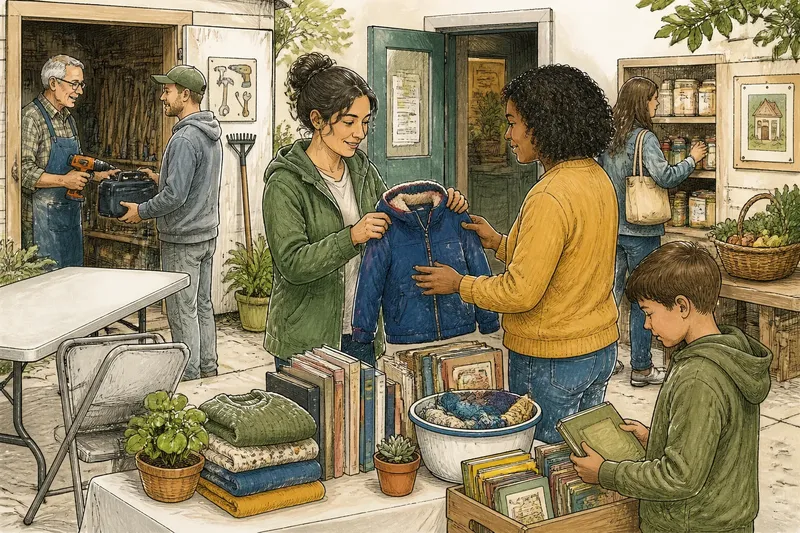
Borrow, swap or give away unused things based on who needs to own them, how often they will be used and how much effort passing them on requires. A folding table needed for one neighborhood potluck calls for a different route than a child’s coat that someone will wear every day.
The choice is less about finding the most virtuous option than matching an item to a real use. A local tool library, a clothing swap, a community pantry or a neighborhood group can each help, but the best route depends on what the item does and what the next person expects.
Should I borrow or own it?
Borrow an item when you need it briefly or only now and then, and when a reliable lending option is easy to reach. Ownership makes more sense when use is frequent, access needs to be immediate, or the item must fit your preferences closely.
Start with the item’s job. A carpet cleaner used for a one-off spill may be available through a tool library or a neighbor. A kettle used each morning is a poor borrowing candidate: returning it, arranging access and waiting for availability would interrupt an ordinary routine.
Borrowing also carries responsibilities. Ask how long the loan lasts, whether the item comes with parts or instructions, and where it should be returned. For shared equipment, leave enough time for the next borrower rather than treating the return date as flexible.
Imagine you need a folding table for a single block gathering. The starting point is a table you do not own and a nearby community center that lends event supplies. You reserve it, carry it to the gathering and return it clean by the agreed time; the expected result is a useful surface for the event without adding a rarely used table to your home.
When does swapping fit?
Swap when you have something useful to someone else and can accept another item in return without needing a precise match in value. Swaps work especially well for books, children’s clothing, plant cuttings and hobby supplies, where another person’s needs may differ from yours.
A swap can happen informally between neighbors or through a hosted exchange. Before setting out, check what the organizer accepts and how leftover items are handled. A clean, complete object is easier to pass on than a bag of mixed pieces that asks someone else to sort it.
Think about whether you want something specific. If you need a particular size of rain boots, a general clothing swap may or may not have them. If your goal is simply to trade a novel you have finished for another readable book, a take-one-leave-one shelf may be a natural fit.
Swapping keeps the exchange reciprocal, but it does not require equal retail value. Agree on the terms plainly if an item is valuable or has special features. For ordinary household goods, a simple conversation about condition and what is included is usually more useful than haggling over an exact price.
When should I give it away?
Give an item away when you no longer need ownership, it is usable, and finding a recipient is worth the handoff effort. Free groups, mutual-aid networks, donation shelves and local reuse centers offer different ways to connect an item with someone who wants it.
Describe the condition honestly. Mention missing accessories, visible wear or a repair that affects use. A clear description helps a recipient decide and avoids a wasted trip. If the item is bulky, say whether pickup is required and offer a practical window rather than leaving arrangements vague.
Some places accept only particular goods or have rules for their condition. Check the receiving organization’s current guidance before bringing items; a donation site is not a drop-off point for everything a household wants to clear out.
For anything that is broken, incomplete or unsafe to use, do not present it as ready for reuse. Check for a repair cafe, parts-reuse option or appropriate local disposal route instead. Passing on an object should not quietly transfer a repair burden that the recipient did not agree to take on.
How do I choose a local route?
Match the handoff to the item and the recipient’s likely needs. A tool library suits occasional-use equipment; a swap event suits items people can browse and compare; a free listing suits an object someone can collect directly. Reuse centers may be better for goods that need sorting or a more structured intake.
Use this short decision check:
- Ownership: Does the next person need to keep the item, or only use it briefly?
- Frequency: Is the item for daily use, occasional use or a single task?
- Condition: Is it clean, complete and ready for the use being offered?
- Access: Can a borrower reach and return it conveniently?
- Handoff effort: Is pickup, transport or sorting manageable for both people?
- Recipient fit: Does a specific local service accept this kind of item?
A neighborhood group can be a useful place to locate these options, but read its rules before posting. Some groups allow free offers but not swaps; others direct bulky goods to a dedicated reuse service. The item’s label, manufacturer instructions and local rules can affect what is suitable to pass on, so check those where they apply.
What should I ask before handing it over?
What condition should I disclose?
State what works, what is missing and what a recipient should know before making the trip. For a borrowed item, also explain any special care or return expectations.
Should I clean or prepare it?
Make it reasonably clean and gather the parts that belong with it, such as a charger, screws or a manual. Do not attempt repairs that require specialized skills; describe the issue and let the recipient decide whether they want it.
What if nobody claims it?
Set a clear end point for the offer, then choose another route rather than letting the item linger indefinitely. A reuse center or local disposal service may be appropriate, depending on the item and its condition.
How do I make a loan feel fair?
Agree on a return time, where the item will go back and how to report damage or a problem. Keep the arrangement simple enough that both people can remember it without repeated messages.
Choose for the next use
Borrowing is strongest when access matters more than possession. Swapping works when both sides welcome a different useful item. Giving away fits when you are ready to let go and can make the item’s condition and handoff clear. These routes can overlap: a local group may connect you to a lender, exchange or recipient, but the decision still starts with how the object will be used.
Think of the handoff like choosing a container for leftovers: the right one fits what needs to go inside and makes the next use straightforward. Before posting or carrying anything out, name the likely use, choose the route that fits it, and make the next person’s expectations plain. That small bit of clarity is often what turns an unused thing into a useful one.