A Short Errand Loop for a Free Afternoon
Plan a short errand loop for a free afternoon by matching nearby stops, a comfortable pause, and a flexible endpoint to the time and energy you have.
A short errand loop works best when its stops share a direction, not just a map pin. For a free afternoon, choose a few nearby destinations that suit your energy, leave room for a pause, and keep the last stop easy to change. The point is to make useful local errands feel like one outing, not a race between appointments.
Start with your afternoon
Before choosing places, decide what kind of time you have. A free afternoon can mean a couple of unhurried hours, a gap before another commitment, or a day when walking sounds appealing but a long trek does not. Those differences matter more than the number of destinations you can name.
Use three simple questions to set the shape:
- Do you have a fixed time to be home or meet someone?
- Would you rather walk continuously, or sit for a while?
- Are you carrying anything, or might a stop leave you with a bulky item?
If you have a firm deadline, make the loop shorter and finish near home, a transit stop, or the next commitment. If the day is open and your energy is good, you can add a stop that is genuinely useful. A paper map or a phone map can help you see the general direction, but the route should still feel comfortable on the ground.
Match the route to you
If you have limited time: Choose one errand and one nearby pause, then finish somewhere that makes the return simple. A library return slot and a bench on the same street may be a better fit than a string of stops spread across town. Keep the final destination optional so a delay does not turn the outing into a scramble.
If you want a gentle walk: Pick places with a natural connection, such as a neighborhood shop, a public garden entrance, and a community noticeboard along the way. Favor streets where you can walk at an easy pace and cross safely. A route that doubles back once is often more pleasant than a direct line along a busy road.
If you have a practical task: Put the task first when it has opening hours or depends on a service counter. Then choose a pause close enough that you can adapt if the errand takes longer than expected. For example, a parcel drop-off followed by a nearby café or public seating area gives the outing a clear purpose without requiring a tightly timed second appointment.
If you are carrying things: Keep the loop compact and place the heavier or awkward stop near the end, close to your return route. A tote bag is easier to manage than several loose items, but do not plan on carrying something farther than feels comfortable. If an errand might involve a large purchase or collected item, make that the endpoint rather than a middle stop.
If you are going with someone else: Choose a destination that gives both of you a reason to join in. One person might need to return a book while the other wants a quiet place to sit. Agree on a flexible endpoint before leaving, so either person can suggest calling it a day without making the other feel that the outing has failed.
Build a loose sequence
Think in terms of a beginning, a useful middle, and a soft landing. Start at the place that is easiest to reach. Put the most important errand early enough that you can still change plans if it is closed or busy. Let the pause come after that task, when sitting down or taking in the surroundings will feel like a real break rather than another item to complete.
Then choose an endpoint with more than one sensible outcome. It might be a small park near a bus stop, a café near the route home, or a public square where you can decide whether to continue or head back. The endpoint is not a finish line. It is a place to check how the afternoon feels and choose what happens next.
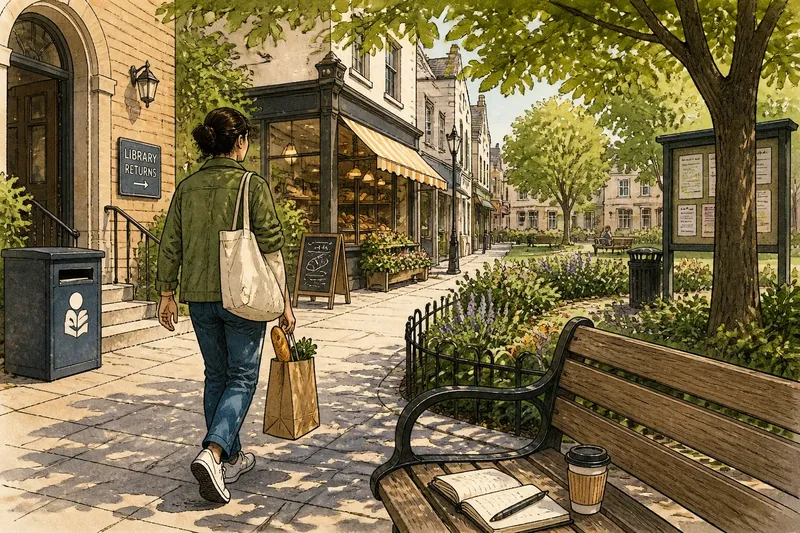
Imagine you have a library book to return, want to pick up a loaf of bread, and would enjoy sitting outdoors. If the library and bakery lie along the same calm street, you could return the book first, buy the bread, and pause at a nearby public garden. If the bakery line is long or the garden is crowded, you can skip the pause and walk home by the shorter route. The observable result is a useful outing with a clear fallback, not a schedule that depends on every stop going perfectly.
Keep the pause useful
A pause does not need to be a purchase. Look for a public bench, a shaded edge of a square, a library seating area, or a spot where you can watch the street without blocking anyone. If you do choose a café, pick one that fits the outing rather than making it the required reward for finishing every errand.
Give the pause a little room, but do not make it another appointment. You might sit, check a local noticeboard, refill a water bottle where facilities are available, or simply decide whether you want to continue. A short rest can change what feels manageable, so keep the remaining route easy to shorten.
Be considerate of shared spaces. Keep pathways clear, take your rubbish with you, and follow posted signs about seating, access, or opening times. When a spot is busy, move on rather than treating a public bench or table as reserved for your outing.
What fits your situation?
How many stops should I include?
Choose only the stops that have a clear purpose, then add at most one optional destination. The right number depends on distance, queues, mobility, and how much time you want to spend pausing.
Should I plan a circular route?
A loop is useful when it avoids retracing a long stretch and ends near a convenient way home. A simple out-and-back route can fit better if your stops sit along one comfortable street or if you want to turn around whenever you choose.
What if a place is closed?
Have one nearby substitute in mind, such as another public seating spot or a different errand that does not depend on the same opening hours. If the main task cannot be done, treat the outing as a walk and leave the task for another time.
How can I keep the outing low-cost?
Build it around errands and public places rather than paid attractions, and bring anything you need instead of relying on a purchase for your break. A café can still be part of the route if it suits your budget, but it need not be the only place to pause.
Leave room to change
Before setting out, check practical details that could alter the route: whether the service is open, whether a public entrance is accessible, and whether the weather makes an outdoor pause comfortable. When access or service rules depend on a posted notice, provider instructions, or local requirements, follow those details. Keep the plan simple enough that a change does not require rebuilding the whole afternoon.
For a short errand loop, the best measure is not how many places you manage to visit. It is whether the route makes the useful stop easy, gives you a comfortable pause, and leaves a sensible way home. Start with one destination you actually need, add only what fits beside it, and let the endpoint remain a choice rather than a deadline.